God of War RagnarökWhy does Kratos escape the prophecy?
A mural foretells Kratos falling into his son’s arms. As the world faces its end, what does he change to make another future possible?
A prophecy of a father’s death. A son searching for a way to save him. Follow the journey that brings Kratos to choices that change the outcome.
Two outcomes beside one father. A conceptual illustration, not a reproduction of the in-game mural. AI illustration · LYFP Studio.
Kratos has defeated mighty gods and survived wars that seemed to offer no way home. Yet a mural gives him no enemy to strike with his axe. In that image, he lies motionless in Atreus' arms. A father who can defy the gods does not yet know how to protect his son from the future.
God of War Ragnarök carries that fear across the Nine Realms. Atreus seeks knowledge to save his father, while Kratos tries to keep his son out of the war. At times, the very people trying to shelter one another push each other closer to what they both dread.
From a snowbound cabin to the battle in Asgard, join LYFP in tracing the choices that lead them to the ending. The mural foretells a death, but the people facing it can learn to live differently.
Winter has arrived. The blood debts remain.
Faye's ashes have returned to her homeland, but the previous journey left debts unsettled. Kratos killed Baldur to save Freya. For a mother who has just lost her son, being saved also means having to live with that grief. As the long winter before Ragnarök descends on Midgard, Freya becomes a pursuing blade in the snowy forest.
Inside their small home, Atreus is also losing a friend. The wolf Fenrir takes his final breath in the boy's arms. Part of his soul finds its way into the knife and stays there, quietly, without Atreus understanding what has happened. Grief also awakens his ability to transform: Kratos searches for his missing son, fights a bear, and is horrified to recognize Atreus beneath his hands.
This scene brings danger into the family itself. Kratos knows strength can save a life, and that a burst of anger can turn a loved one into a victim. The more afraid he becomes, the more he wants control. The older Atreus grows, the more he needs to understand who he is. They still love each other, but the ways they express that love are beginning to hurt.
Then Thor and Odin knock on the door. Odin offers a deal: Atreus must stop searching for Týr, the missing Norse god of war. Kratos refuses. The clash between the Leviathan Axe and Thor's hammer immediately draws the father away from home, giving Odin a chance to speak to the son alone. The hammer blows ask the player to read the rhythm, evade danger and find an opening. A more dangerous attack begins with an invitation to Asgard.
Father and son see the same future, and fear different things
Atreus believes finding Týr will help them oppose Odin and understand the prophecy. Kratos goes with him, carrying a different secret: he has seen a Giant mural depicting himself motionless in his son's arms. He is also haunted by the prospect of Atreus falling into Odin's hands after that death.
Brok and Sindri give the group a refuge among the branches of the World Tree. In God of War, Norse mythology shapes how people travel, preserve memories and conceal the truth. Special pathways connect the realms; writing and murals can reveal what strength alone cannot uncover. Atreus reads the traces, Mimir explains them, and the smiths open the way. Even the strongest warrior needs the knowledge of those beside him.
They find the man they believe to be Týr in the mines, but he is frightened and recoils from war. In Alfheim, another layer of truth emerges: Gróa concealed from Odin that Asgard would be destroyed while the other realms could survive. The one who claims to know the future knows only what someone else allowed him to see.
Atreus hears a reason to act against Odin. Kratos sees his son moving closer to the war he wants to avoid. Back at the dinner table, each person's explanation touches the other's fear. In LYFP's reading, the distance between them grows because both believe that keeping their fears unspoken is a way to protect the family.
In Ironwood, the name Loki becomes a burden
Ironwood brings Atreus closer to the inheritance Faye left him. Angrboda, a young keeper of the Giants' memories, calls him Loki with easy familiarity. Surrounded by paintings of his own life, Atreus feels close to answers about everything hidden from him. Then the final covering is lifted: his father lies in his arms, followed by an image of him beside Odin.
Panic turns Atreus into a wolf, and he lunges at the mural. His reaction resembles the way Kratos once faced loss: find something to hit, as though breaking the object in front of you could prevent what lies beyond it. Angrboda stays and helps him calm down. The painting remains. The person looking at it must learn to bear what he has just discovered.
The stones holding Giant souls also place a responsibility larger than his own fears in Atreus' hands. Yet the stone bearing Faye's name is empty. The ability to preserve a soul cannot bring back everyone who has died. He still has his father, and still has time with him. From this point onward, any promise of a way to save his father can become hard to resist.
Freya regains her freedom. The grief stays.
When Freya attacks again, Kratos intervenes to keep both her and Atreus from another death. She proposes a bargain: help her break the binding Odin placed on her. Kratos agrees, even though that freedom could also let Freya continue her fight against him.
In Vanaheim, the reunion with Freyr brings Freya's family history back into view. A marriage once intended to secure peace became a place of control. Beneath the roots of the World Tree, she and Kratos must work together to overcome the dragon guarding the source of the magic that binds her to Midgard. Each person's strength creates an opening for the other to act.
Freya regains the right to choose, but Baldur is still dead. Her decision to remain with the group does not erase her anger in an instant. It shows how someone can carry grief forward while gradually ceasing to let revenge decide their entire life. Kratos is witnessing a lesson he must also learn to put into practice.
What does Odin want from Kratos' son?
An argument around the dinner table sends Atreus away from home in anger. In Asgard, Odin offers what he has been missing: a place to stay, a task, and the feeling that he is valued. Compared with his father's harshness, this welcome can make a teenager feel he is finally being heard.
Deep below, Odin shows Atreus a rift. He believes answers to questions beyond even the gods lie on the other side; he also says he lost an eye trying to look into it. According to Odin, a broken mask must be completed to approach that mystery safely. Atreus can read the symbols on its fragments.
Odin therefore needs the boy's talent to move closer to the knowledge he craves. Atreus needs answers to save his father. Their desires meet at the mask, but the balance of power strongly favors the one handing out the assignments. Odin gives Atreus a sense of independence while every task serves his own purpose.
Here, it matters to distinguish Odin's belief from what the story actually confirms. The game does not establish that the rift truly contains the answers he wants, or that the mask would give its wearer absolute power. Read this way, the mystery reveals the temptation of the unknown: the mere belief that it might save someone he loves is enough to draw Atreus deeper into his enemy's plan.
The Norns see a warrior's habits
Kratos seeks the Norns hoping to hear of a way to save his son. Instead, he receives an uncomfortable observation: people's choices are so predictable that their futures appear already written. When he hears that Heimdall will threaten Atreus, his first response is to decide that Heimdall must die.
This is a crucial link in the question of prophecy. Kratos believes he is resisting the foretold outcome, yet he still answers fear in the familiar way. If every danger leads him back to the same choice, knowing about the danger in advance is not enough to escape it.
To counter Heimdall's ability to read intentions, Brok and Sindri help forge the Draupnir Spear from a ring that can replicate itself. Leaving spears embedded and then detonating them creates situations unlike a straightforward blow. This new combat tool arrives just as the story presents an opponent who demands a different approach.
At the forge, the truth that Brok is missing part of his soul comes to light. Amid the smith's shock, Kratos still asks him to bless the spear. The gesture preserves Brok's dignity just when his incomplete soul has been exposed. Beside the decision to find a way to kill Heimdall, the story records a gentler use of strength: protecting a friend's dignity.
A mistake opens the way home again
Atreus frees Garm in Helheim out of sympathy for a chained creature. He does not understand that the wolf can tear through the boundaries between realms and let danger spill into the world of the living. Good intentions do not prevent consequences. On returning, he must face the people paying the price for what he has done.
This time, Kratos responds differently. He puts a hand on his son's shoulder and joins him in putting things right. The change needs no grand declaration: Atreus can come home, admit a mistake and tell the truth without immediately being driven deeper into anger. There is room in the home again for a child who has done something wrong.
In Helheim, bringing down Garm's body still does not end the battle. Atreus realizes that Fenrir's soul remains in the knife. With his father's help, he places his friend's soul inside the wolf's body. A small detail from the beginning of the journey becomes the answer. Father and son working together accomplish what repeated blows could not.
Afterward, Kratos admits he has been too harsh, and Atreus acknowledges his own mistakes. In LYFP's reading, this prepares the way for the ending: the father begins to change how he listens and responds to his son before he has to make a life-or-death choice on the battlefield.
A victory that does not leave the past behind
The rescue mission in Vanaheim brings Kratos face to face with Heimdall. Draupnir's spears stick, explode and force the opponent to handle several threats at once. Once his evasive rhythm is disrupted, an opening appears to move in close. The battle turns the preparation at the forge into something the player must carry out with each attack.
Kratos gives Heimdall a chance to stop. Heimdall keeps threatening Atreus, and anger finally closes Kratos' hand around his throat. He wins the horn needed for the coming war, but fear for his son can still drag him back to his old methods. Earlier progress does not keep the past from returning.
When Atreus wants to visit Asgard again, he tells his father before leaving. Kratos remains afraid but lets his son choose. The mask is completed; a confrontation with Thor forces Atreus to escape back to Sindri's house. The group believes it finally has something Odin must fear. They do not yet know how much closer their enemy has been.
The enemy has been sitting beside the hearth
The man wearing Týr's face suddenly claims to know a secret route into Asgard. Brok presses him: where is it, and why mention it only now? His blunt questions puncture the suspiciously easy opportunity everyone wants to believe in.
A knife strikes Brok. The false Týr grabs Atreus and reveals himself as Odin. Their enemy has entered their refuge, sat beside the fire and listened to what this family says to one another. That revelation destroys the home's sense of safety, even after Kratos protects his son.
Brok does not survive. Sindri gave everyone shelter, effort and care; now his brother is gone. That death must retain its weight in any account of Kratos' growth. One person can learn to live differently while someone beside him carries a loss that cannot be repaired.
At the end of the world, a father changes his lesson
The war can no longer be postponed. Surtr agrees to become the being Ragnarök. The primordial fire in Kratos' Blades helps make that path possible, sparing Sinmara the price bound to the prophecy of their union. Even in the preparations for the end of the world, choices made for loved ones take events beyond the lines of the paintings.
The horn sounds, the realms gather, and Kratos leads an army once more. The warrior who once dragged Olympus into his revenge faces a familiar opportunity: advance, defeat those in the way and accept losses to achieve victory.
But mortal civilians stand in the path of the attack, placed in danger by Odin. Atreus tries to suppress his compassion as his father once taught him. Kratos stops him, admits that lesson was wrong and changes the plan to put saving civilians first. He allows other people's suffering to affect his decision.
This is a turning point expressed through action. Kratos changes how he fights at the moment of greatest pressure, when compassion could make victory harder. A change built through conversations, attempts to make amends and failures to control his anger now reaches beyond his family. It becomes a responsibility toward people he has never met.
Thor lowers his hammer. Atreus breaks the mask.
Axe and hammer meet one last time. Once he has the advantage, Kratos stops and reminds Thor that they can still change for their children. Thor lowers his hammer. Two fathers who have caused losses that cannot be undone recognize a choice still within their power: whether to keep doing what they have always done.
Odin arrives and orders Thor to kill. This time, Thor refuses, and his own father stabs him to death. That final decision does not make Thor innocent, but it shows that he can still stop obeying. Odin responds to losing control by destroying the person who has ceased to follow his orders.
Beside the rift, Odin again promises every answer. Atreus raises the mask, then breaks it. He gives up the chance of knowing everything that Odin is offering and keeps the right to decide within an uncertain future. This is Atreus' own choice, and it belongs beside his father's change when we look back at the outcome.
Odin falls into the boy's arms. His soul is placed in a stone before Sindri destroys it. The image recalls the earlier mural, but that does not mean its figure was always Odin and everyone simply misread it. The story has reached a different outcome through different choices.
Asgard collapses. Freyr stays behind to hold off the blow and buy the others time to escape. Angrboda and Fenrir open a route to safety. The friend who died at the beginning now helps bring them home. Brok and Freyr do not return with the survivors.
Before the final mural, Kratos learns to let his son go
After the war, the survivors must find homes and learn to continue amid the absences. Atreus discovers that Faye resisted the path laid out in the murals, giving father and son the opportunity to choose for themselves. Her actions gave them room to live; the decisions filling that room still had to be their own.
Atreus needs to find the remaining Giants. Kratos agrees to let him go. The man who once wanted to keep his son from every danger now accepts that the boy has a journey of his own. Fear has not disappeared, but it is no longer enough to justify deciding for him.
When the final mural is revealed, Kratos sees himself honored by others. It is a possible future opening before him, not proof that all Nine Realms already worship him after the battle. Hands that once spread fear may help rebuild homes for other people. Another kind of life becomes imaginable.
Why does Kratos escape the prophecy?
In this article's reading, the answer lies in a whole sequence of changes. Kratos gives his son the chance to speak honestly and make amends. He trusts Atreus despite his fear, revises his lesson about suffering and spares Thor when he could keep killing. Atreus also stops placing all his hope in knowing the future, breaking the object Odin has used to steer him.
The encounter with the Norns gives those actions particular meaning. If a future becomes predictable because people repeat the same choices, changing the plan while treating others in the same old way is not enough. Kratos must become someone who can stop, listen to his son and accept compassion even when those things leave him vulnerable.
In LYFP's reading, Ragnarök retains its weight because a brighter ending does not erase the losses. Sindri is still hurting. Brok is dead. Freyr stayed behind. Kratos survives with the responsibility of deciding what to do with the life he still has.
He can become someone who rebuilds a world after once destroying one. Atreus can walk forward without inheriting his father's anger unchanged. That is the dawn the story leaves us: the future can take another direction when people find the courage to change how they live in the present.
Meet fellow gamers in Game Offline.
Share experiences, discover great games and meet people who share your interests.
One father, many paths
Seven perspectives on prophecy, the mask and the right to choose. Scroll sideways and open an image to explore. These are LYFP’s AI illustrations.
More worlds to explore together
Follow LYFP to revisit memorable stories, characters and moments in games.
Ready to enter the Nine Realms?
Choose God of War Ragnarök for your platform. The official pages below explain editions and system requirements.
- Official title
- God of War Ragnarök; also commonly called God of War 5
- Developer
- Santa Monica Studio
- PlayStation publisher
- Sony Interactive Entertainment
- Genre
- Single-player, third-person action adventure
- PS4 / PS5 release
- 9 November 2022
- PC release
- 19 September 2024
- Platforms
- PlayStation 4, PlayStation 5, Windows PC
- Setting
- A world inspired by Norse mythology within the God of War universe
Sources and material
The article develops LYFP’s video commentary. Official sources verify game and edition information; readings of prophecy and character psychology are LYFP’s interpretation.
- P1God of War Ragnarök video · Trần Huỳnh Phi / LYFP ↗
The article develops the Vietnamese commentary in LYFP’s video; analysis is presented as the writer’s interpretation.
- O1PlayStation · God of War Ragnarök ↗
Official title, PlayStation publisher, platforms, original release date and general premise.
- O2PlayStation Blog · God of War Ragnarök comes to PC ↗
The PC release date of 19 September 2024; not a source for the ending’s plot details.
Writing and interpretation: LYFP Studio, developed from LYFP’s approved commentary. AI illustrations: LYFP Studio. God of War Ragnarök, its characters and world belong to their respective owners, including Sony and Santa Monica Studio.
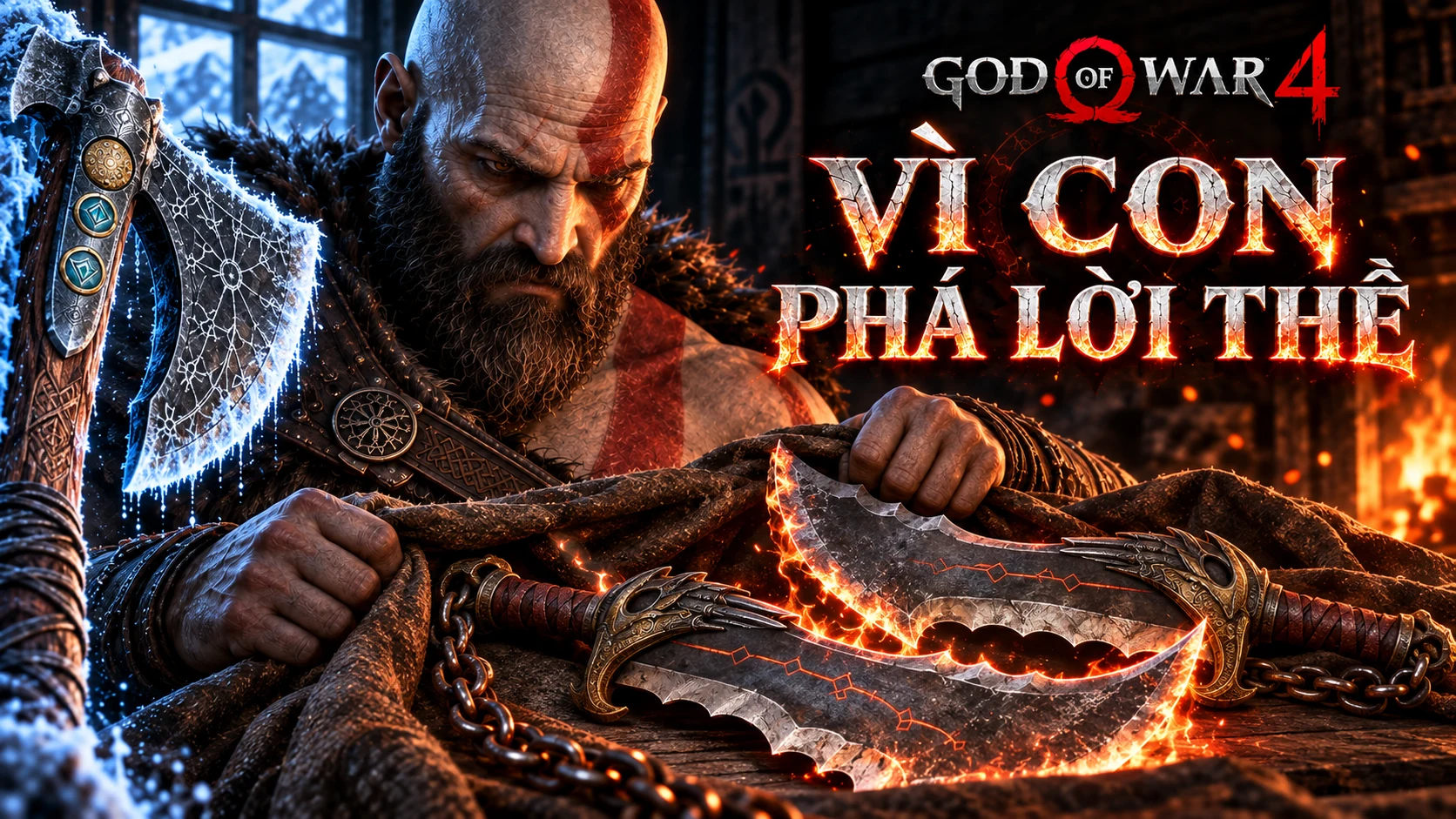
God of War (2018): A father awakens his past
Return to the earlier journey to understand Faye, Baldur, Freya and the fears Kratos carries into Ragnarök.
Enter the story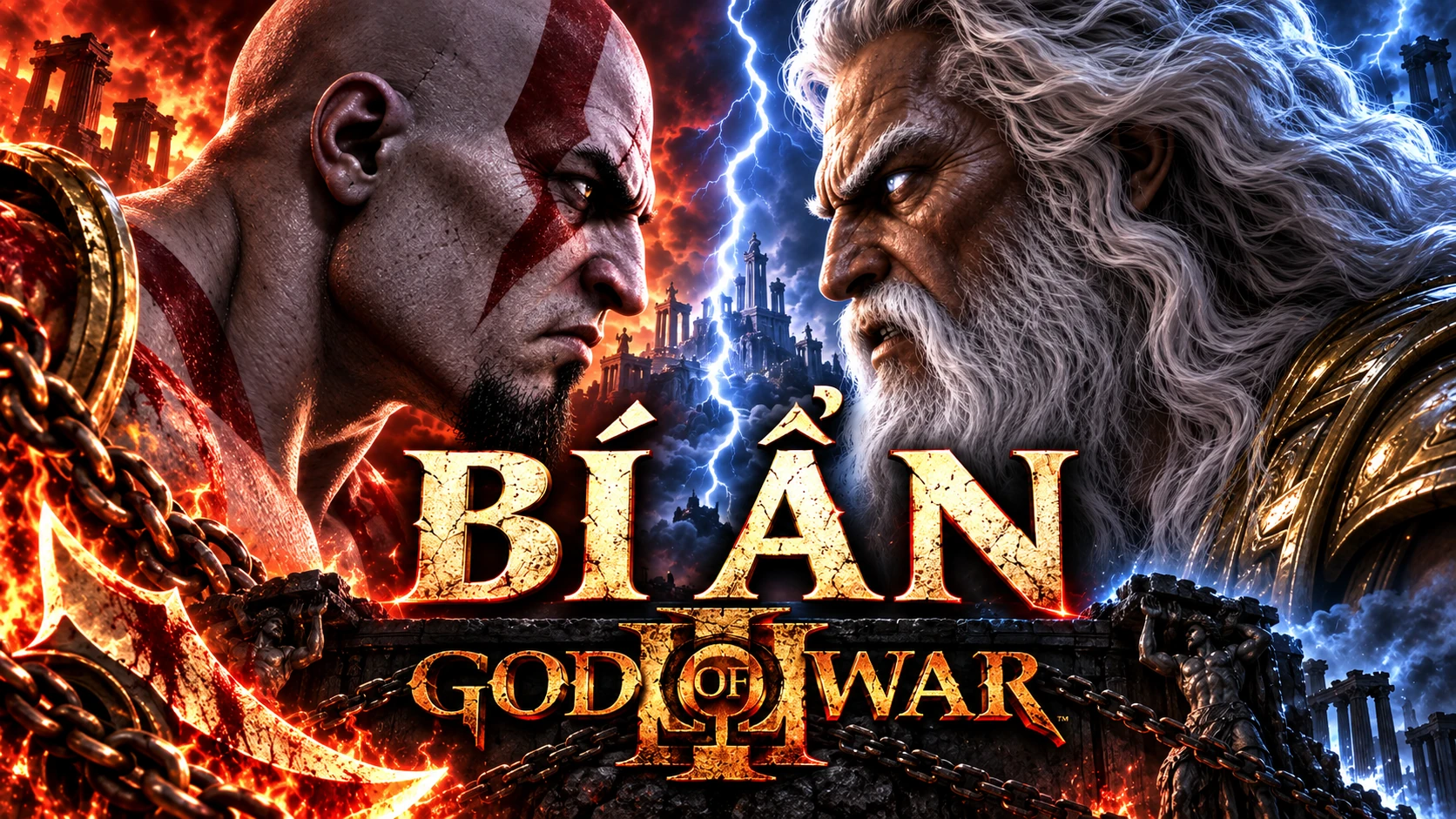
God of War III: After defeating Zeus, what remains?
Revisit the Greek past to understand the weight of choosing differently.
Enter the story