God of War II: Reclaiming fate
A throne built on fear. A return that cannot erase loss.
Zeus turns the victory at Rhodes into a trap. Kratos seeks the Sisters of Fate to return to the moment of betrayal. But if he wins the power to change the past, can he save what he has lost?
Kratos’s journey from the trap at Rhodes to his return with the Titans.
Before the Sisters of Fate, Kratos demands the right to change what has been decided. AI illustration · LYFP Studio.
A sword thrust should have ended Kratos’s life. Amid the ruins of Rhodes, he lies watching his own power in the hands of the god who betrayed him. But for a man who has returned from death, revenge is no longer simply a matter of reaching his enemy. Kratos wants to return to the very moment when Zeus believed his fate was sealed.
God of War II begins a journey in which the past itself can become a battlefield. Beneath temple roofs and across the shoulders of Titans, the story places two desires side by side: the right to decide one’s own fate, and the determination to make others pay. Join LYFP in following the Spartan warrior to see what he can truly hold on to when he seizes the thread of his own life.
A divine throne cannot protect the one who sits upon it
At the end of God of War, Kratos kills Ares and becomes the god of war. The gods forgive his sins, but the nightmares of his wife and daughter remain. His new position takes him to Olympus without giving him back a home. As God of War II begins, that estrangement leads him to seek a place among the Spartan warriors, in conquests fought in his name.
Athena warns him that Olympus will not tolerate this forever. Kratos nevertheless descends to lead his army. This matters to our understanding of him: the gods betray him, but he also actively chooses war. His anger has a cause; the cities in the path of his conquests still suffer its consequences.
In LYFP’s reading, becoming the god of war has become an unfulfilled promise. Kratos has more power, worshippers and victories through which to assert himself. What he lacks is a way to live without constantly proving his strength. Rhodes will strike directly at that dependence.
Rhodes: when victory itself is the trap
Kratos arrives at Rhodes in gigantic form. An eagle drains some of his power, then brings the city’s bronze statue to life. The warrior who had been looking down upon the battlefield must now look up at his opponent. The scale of his surroundings changes, turning a sense of domination into one of danger.
The Blades of Athena, a catapult and openings in the Colossus all play a part in the battle. Zeus then offers the Blade of Olympus, the sword he once used to defeat the Titans. To wield its full might, Kratos channels his divine power into the blade. This is the step that strips him of a god’s protection; being reduced in size earlier did not mean that all his divine power was already gone.
Kratos destroys the Colossus from within. But the statue’s falling hand crushes him amid the victory he has just won. The sword holding his power lies nearby, while the victor’s body can no longer reach it. The game gives the player the satisfaction of overcoming an extraordinary challenge, then turns the reward into something Kratos can no longer grasp.
The eagle reveals itself as Zeus. He demands obedience, receives a refusal, then uses the Blade of Olympus to kill Kratos and wipe out the Spartan army at Rhodes. The god who offered a way out had prepared the trap himself. But why must the king of the gods go to such lengths to remove one man?
Gaia opens a path and tells of another throne
Hands pull Kratos down into death. From the depths, Gaia points him toward the Sisters of Fate, who can intervene in the past. If he seizes their power, he can return to the moment Zeus struck. Kratos wants revenge; Gaia wants to oppose Olympus. Her help carries a purpose of its own.
Back above ground, Kratos meets a surviving soldier and tells him to return to Sparta. He rides Pegasus toward the Island of Creation. Along the way, Gaia tells the story of Cronos: the Titan swallowed his children for fear they would overthrow him. Rhea saved Zeus by substituting a stone wrapped in swaddling clothes. The surviving child grew up and defeated the generation of Titans that came before him.
The motif of a father fearing replacement by his child has roots in Hesiod’s Theogony. Cronos swallowing his children and the substituted stone appear in the ancient text, long before the game. God of War II brings that material into Kratos’s own conflict. The divine family tree becomes a warning: the ruler was once a rebel against authority, and may in turn fear a successor.
Hesiod · Theogony, translated by H. G. Evelyn-White ↗Gaia is part of the history she recounts. She once raised Zeus, then witnessed the Titans’ defeat. Saving Kratos also opens a path for the older generation to return. When every side carries an unpaid debt, receiving help does not necessarily mean becoming free.
Others who also want to undo a loss
Theseus guards a door Kratos must pass. The Barbarian King, who once drove him to plead with Ares, returns to demand his life. Even the soul of the Boat Captain he abandoned appears during the fight. These opponents fill the road to the Fates with traces of the past: Kratos wants to undo a betrayal, but those who have suffered at his hands still have debts left unsettled.
Perseus also seeks the Sisters of Fate to save the person he loves. Two men hoping to reverse a loss see each other as obstacles. An invisibility helmet cannot preserve Perseus’s hope. At the edge of an abyss, Icarus likewise refuses to give way; after their struggle, Kratos takes his wings and continues the journey.
In the player’s hands, each item changes how to move forward. The Barbarian King’s hammer brings a heavier rhythm than the blades. The Golden Fleece allows suitable attacks to be blocked and countered with the right timing. Icarus’s wings help cross chasms. Powers with names drawn from mythology become tools the player must use, rather than merely hear about.
The Golden Fleece is taken from Cerberus; the snake-haired monster encountered here is Euryale, not Medusa. Keeping the names straight also preserves the distinct memories of each game. More importantly, among the tools Kratos acquires, a means of protection will return at a decisive moment against Zeus.
Mythology has the weight of stone, chains and bodies
The gigantic Steeds of Time pull mechanisms into motion. Below the earth, Atlas makes Kratos seem no larger than a speck of dust. Temples, chasms and Titan bodies repeatedly change the warrior’s scale. He may be devastating against an army, yet still has to find his way through a world far larger than himself.
In God of War, Atlas is forced to bear the world. In the Theogony, his punishment is to hold up the sky. The two images are related, but are not identical. Recognizing that distinction lets us appreciate the game’s invention while acknowledging the different versions and contexts of the ancient myths.
Hesiod · Theogony, translated by H. G. Evelyn-White ↗In an interview before the game’s release, Cory Barlog discussed the challenge of turning Atlas into a traversable level. His account shows how mythical scale is directly bound to spatial design. In LYFP’s reading, the sense of grandeur comes from the player having to find a route across a body too vast to take in at a glance.
Shacknews · Cory Barlog on God of War II (2007) ↗Temples and divine statues also evoke a particular cultural life. In ancient Greek religion, sanctuaries, offerings and appeals for protection connected communities with the gods. The game borrows those familiar images and pushes them into violent conflict. The world Kratos travels through is a fictional adaptation, not a complete reconstruction of Greek belief.
The Metropolitan Museum of Art · Greek Gods and Religious Practices ↗Atlas has his own reasons to hate Kratos. On learning that the warrior is opposing Zeus, the Titan agrees to help him and returns him to his path. A shared enemy holds this alliance together. It strengthens Kratos while drawing his journey into the war between generations of gods.
The soldier returns, but Sparta is gone
In the darkness, Kratos fights a man blocking his way. Only when his opponent falls does he recognize the warrior he had told to return to Sparta. The soldier brings news that Zeus has destroyed the city. The place that still worshipped Kratos and called him its god of war is now in ruins.
This scene makes the quest to change fate more painful. Kratos has overcome gigantic opponents in search of the power to intervene in the past, yet he fails to recognize one of his own before striking. The soldier dies before him. The path to power remains open; something worth returning to has been lost.
During the confrontation with the Kraken, Gaia uses the image of Kratos’s wife to awaken his resolve. This is not a resurrection. A familiar face becomes a means of calling him back to the fight. The Kraken falls, a bridge opens the way, and the Phoenix carries him to the Sisters’ temple. The closer he comes to rewriting fate, the heavier the question becomes: will what he has lost truly return with him?
To change the past, he must first protect it
Lahkesis refuses Kratos’s demand. Before the Sisters, lives appear as threads held by another power. The man who once sat on Olympus is again made to wait for a judgment. But he has travelled too far merely to ask for an exception.
Atropos takes Kratos back to his battle with Ares and tries to destroy the sword that helped him win. This is not the Blade of Olympus. It is the weapon from the first game’s final battle, and destroying it threatens the very past that brought Kratos to the present. Before he can change the moment of his own death, he must keep an earlier victory from being erased.
After defeating Lahkesis and Atropos through the time mirrors, Kratos reaches Clotho. Her enormous arms and the machinery of the chamber demand both fighting skill and control of the space. Clotho falls; the man who came seeking a changed fate now stands before the Loom with the power to choose a moment for himself.
For LYFP, this is where mechanics and story meet most clearly. An invisible concept such as fate becomes something to see, follow and affect. Players do more than hear Kratos declare his defiance. They must take him through the doors, protect the past and seize the means to intervene in it.
Back at Rhodes, the trap changes hands
Kratos returns to the instant before Zeus kills him. The Kratos who has completed the journey rushes in to stop the sword, while his wounded past self still lies there. Two versions appear at the same moment, but there is no scene of two Kratoses fighting Zeus together. The confrontation belongs to the man who found his way back.
Recovering the Blade of Olympus is not enough to defeat the king of the gods. After their clash, Kratos kneels, making Zeus believe that his will to resist has broken. The man who once refused submission now shows his enemy exactly what he wants to see. Zeus steps closer, raises the sword and leaves an opening.
The Golden Fleece catches the blade. Kratos counters and takes back the weapon. A treasure acquired earlier in the journey now directly helps change the outcome. The satisfaction comes from those connections: an ability already earned, a betrayal still remembered, and a man who does not repeat his earlier defeat in the same way.
The power to change the past brings Kratos to the battle. A combination of strength, defense and deception lets him turn it around. The trap at Rhodes has been answered with another trap.
Athena answers the question: what does Zeus fear?
As the blade moves toward Zeus, Athena rushes in to stop it. The goddess takes the blow. Kratos halts before the one who once helped him ascend to Olympus, while Zeus escapes a revenge that had seemed moments from completion.
Athena explains that Kratos is Zeus’s son. The king of the gods fears that his own child will one day overthrow him, just as he once overcame Cronos. Gaia’s story from earlier in the journey now explains the present. The father sees his son as a threat to his throne and acts to prevent what he fears.
In LYFP’s reading, fear leads power to create new enemies. Zeus sets a trap to preserve his rule, but that betrayal drives Kratos to oppose all of Olympus. This is an interpretation of the characters’ choices; it need not be turned into a hereditary curse or explained by importing what the third game later reveals into the second.
Kratos rejects the father Athena has just named. His refusal does not bring her back. The goddess dies, Zeus lives, and the warrior chooses to continue the war. He has reclaimed the moment of his earlier defeat, but the new outcome still leaves someone dying in his arms.
Fate reclaimed, peace still beyond reach
Kratos returns to the Loom, travels to the time before the Titans were defeated, and brings them into the present. Gaia and the generation once subdued by Olympus now have a chance to climb the gods’ mountain. One man’s revenge becomes part of an entire generation’s war.
God of War II ends as that assault begins. Zeus has not been killed, and Olympus has not been destroyed. Kratos’s victory in this game is to escape a death that already happened and seize the initiative. The game does not end by confirming that Sparta or his family has been restored.
Nor does this journey fully explain every question about its timelines. We can ask why Kratos does not choose a different moment, but must distinguish the audience’s questions from rules the game has established. This reading stays with the choice the story actually shows: he uses his newly seized power to continue fighting Zeus.
That is the weight left after the clash of the blades. Each victory gives players another ability, another path and a greater sense of control. At the same time, the story places before Kratos what power has yet to return: a city, a loyal soldier, Athena and the peace he has lacked from the beginning. He can now reclaim a moment. How he uses it will shape the next tragedy.
Meet fellow gamers in Game Offline.
Share experiences, discover great games and meet people who share your interests.
More worlds to explore together
Follow LYFP to revisit memorable stories, characters and moments in games.
Return to God of War II (2007)
These details refer to the original PlayStation 2 game. The links below identify the correct title and its release history.
- Official title
- God of War II (2007), often called God of War 2
- Developer
- Santa Monica Studio
- Original publisher
- Sony Computer Entertainment; Sony Computer Entertainment America published the North American version
- North American release
- 13 March 2007
- Original platform
- PlayStation 2
- Genre
- Single-player action adventure, hack and slash, and puzzles
- Setting
- A fictional world inspired by Greek mythology
- Place in the story
- Follows God of War (2005) and leads into the war in God of War III
Sources and material
Sony and PlayStation verify game information. Hesiod and The Met provide mythological and cultural context; Cory Barlog’s interview discusses design. Interpretations of the characters are identified as LYFP’s reading.
- V1Trần Huỳnh Phi · God of War II: Why does Zeus want to kill Kratos? ↗
LYFP’s companion video about Kratos’s journey to reclaim his fate.
- O1Sony Interactive Entertainment · God of War release dates ↗
North American release date of 13 March 2007 and Santa Monica Studio as developer. The 2012 sales figure is not treated as a current total.
- O2Sony · God of War II Rocks Beyond PlayStation 2 (2007) ↗
PS2, the North American publisher, the quest to change fate, mythical setting, combat and puzzles.
- C1Hesiod · Theogony, translated by H. G. Evelyn-White ↗
Context for Cronos swallowing his children, the swaddled stone and Atlas bearing the sky. Ancient mythology, not confirmation of every game event.
- C2The Metropolitan Museum of Art · Greek Gods and Religious Practices ↗
Temples, sanctuaries, offerings and the relationship between communities and gods in Greek culture.
- D1Shacknews · Cory Barlog on God of War II (2007) ↗
A direct interview on design ambitions, particularly the level on Atlas’s body. The source spells the name Atlus; this article uses Atlas.
Writing and interpretation: LYFP Studio, developed from the final script of the God of War II project. AI illustrations, including their lettering and logos, were generated with ImageGen. God of War, its characters and game materials belong to their respective owners. This LYFP analysis is not an official Sony or Santa Monica Studio publication.
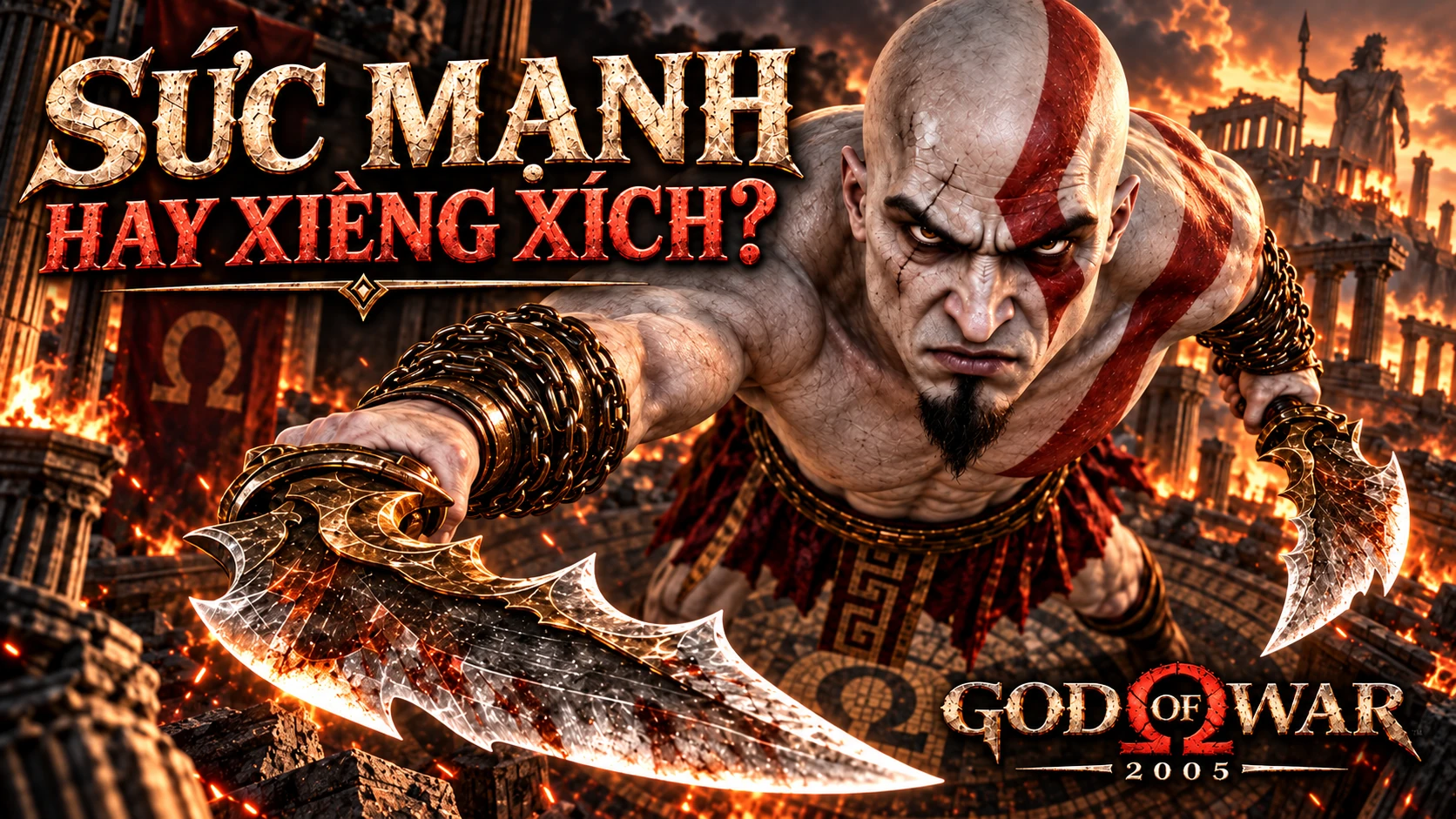
God of War (2005): The price of power
Return to the pledge to Ares and discover why a divine throne cannot erase the nightmares.
Enter the story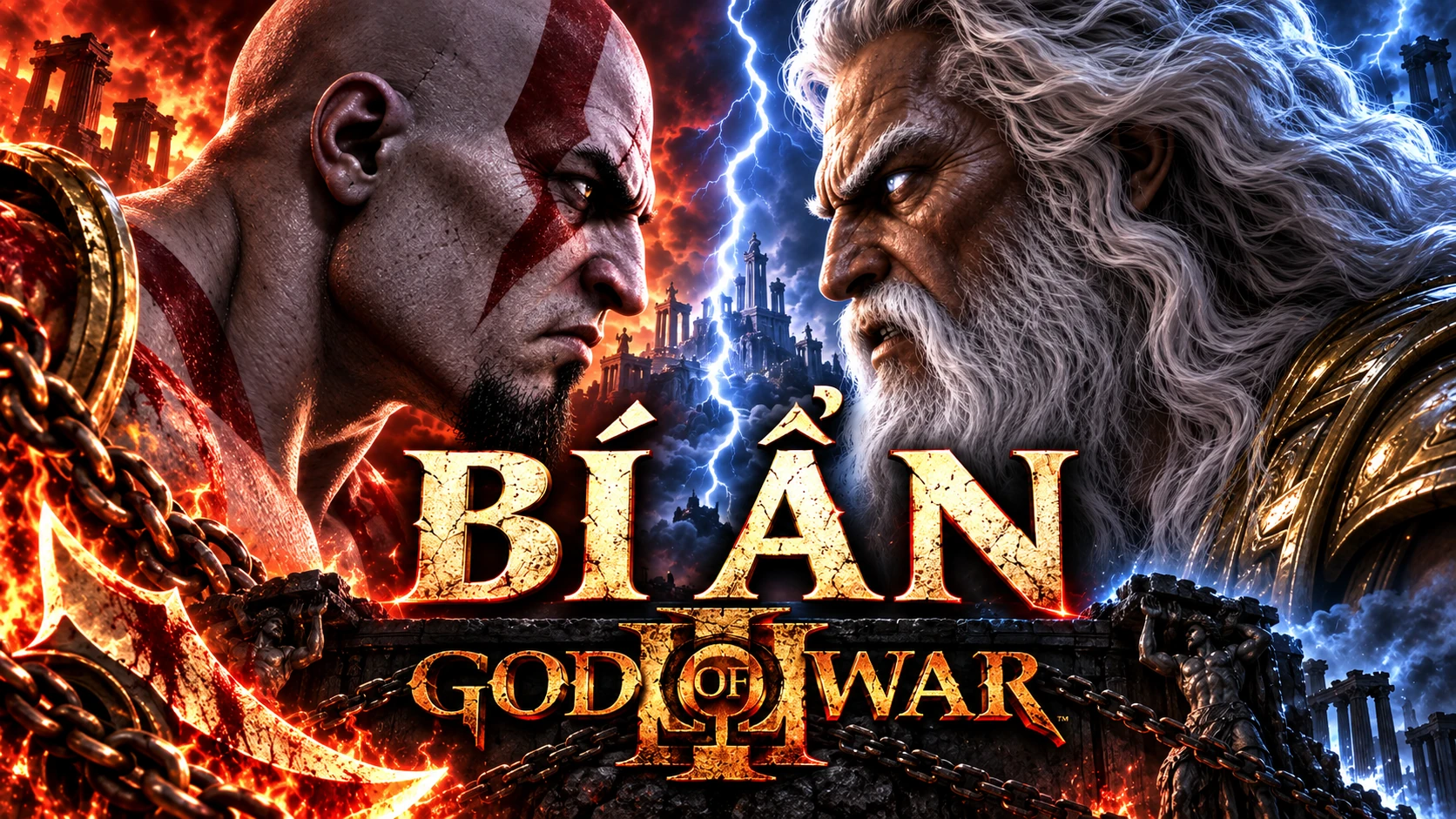
God of War III: After defeating Zeus, what remains?
Follow the assault on Olympus that begins at the end of God of War II.
Enter the story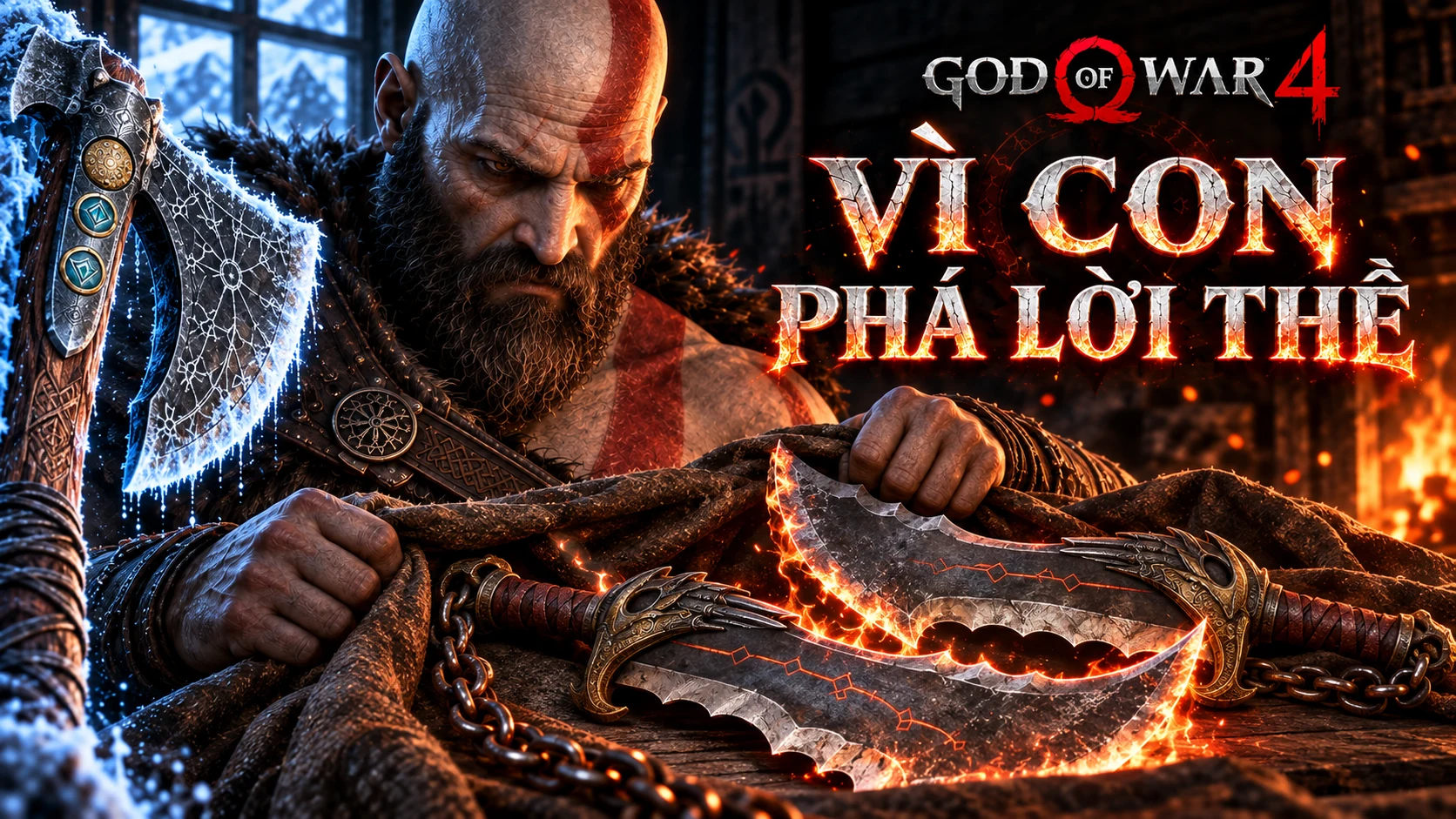
God of War (2018): For his son, Kratos awakens the past
Meet the warrior again as he learns to protect someone and be a father.
Enter the story